How to Track Your Race Results and Improve Year Over Year
Most of us remember our PR and not much else. Here's what's actually worth logging, and why it changes how fast you improve.
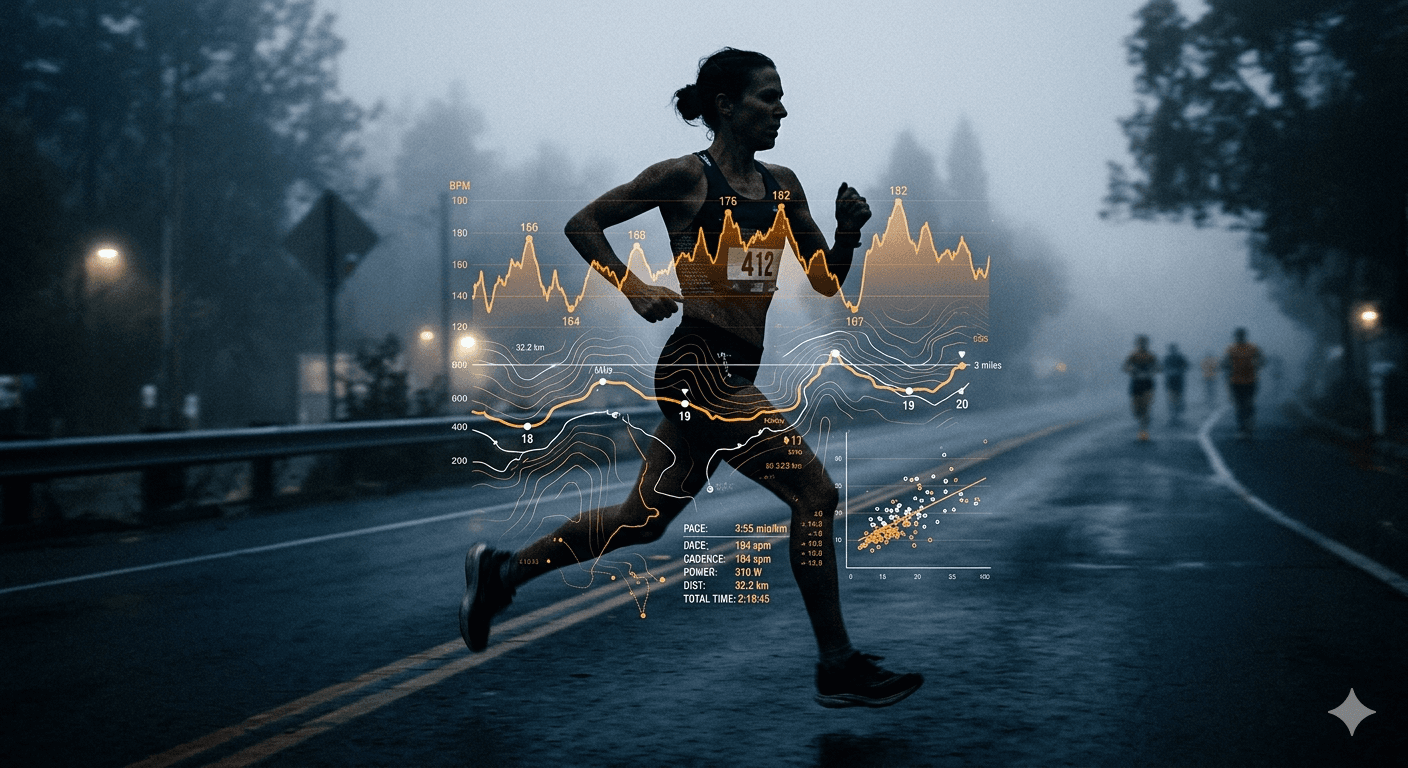
You can't improve what you don't measure. Most of us remember our marathon PR and roughly how the race felt. Almost nobody tracks the stuff that actually drives improvement: pacing, weather, training load, nutrition, how hard the course actually was.
Without that context, every race is just a number on a finisher's certificate.
What to log after every race
Right after you cross the line, or once you've had a minute to catch your breath, write down:
- Official finish time and position, overall and in your age group
- Category or distance, especially if you race more than one
- Course conditions. Weather, surface, elevation. You run differently at 10°C than you do at 25°C, and that matters.
- Pacing notes. Did you go out too fast? Did you negative split?
- Your nutrition plan. What gels, at what intervals, did your stomach actually cooperate?
- How you felt. Energy, cramping, your headspace at km 30.
- The training that got you there. Recent weeks, rest, any injuries.
- What you'd do differently. Honestly, this one matters most.
Why chasing PRs alone is misleading
PRs feel great, but they don't tell the whole story. A 3:45 marathon on a hilly course in 28°C heat can mean better fitness than a 3:38 on a flat course in perfect weather. Without context, times don't mean much on their own.
Track your results against the course and conditions, not just as a list of numbers. Over time, that gives you a far clearer picture of where your fitness actually stands.
Spotting patterns across seasons
Once you've got two or three years of results logged, patterns start showing up that you'd never catch just remembering times:
- Which race formats suit you. Flat or hilly, short or long.
- How travel fatigue actually affects your performance. Morning flights versus evening arrivals.
- Which training blocks led to your best results.
- How you perform across the season. Spring peak or autumn peak?
- Whether certain venues just consistently work for you.
None of this shows up without structured history. Scattered memories don't cut it.
Setting goals that actually mean something
"Run a sub-4 marathon" is fine, but process goals get you there faster:
- Cut my half-marathon pace by 15 seconds per km over the next six months
- Finish top 20% of my age group at my next triathlon
- Negative split every race this season
Goals like these only work if you actually know where you're starting from. That means tracked results.
Using your history to plan next season
At the end of each season, sit down and ask yourself:
- Which races did I enjoy most, and why?
- Which ones underperformed, and what was different?
- Which distances or formats do I want more of?
- Which venues are worth flying back to?
With a real race history behind you, end-of-season review stops being a vague guessing game. You go into next season actually knowing what worked.
What tool to use for tracking race results
A spreadsheet works, sort of. It just doesn't connect to your travel history, doesn't show your progress visually, and falls apart the moment you stop keeping it updated.
TripToRace's results module lets you log each result right on the event page. It calculates your personal bests automatically and shows your progress across the season, all tied back to the race it came from, the conditions, the course, the trip.
Spreadsheet, app, or notebook, the habit matters more than the tool. Log your result and the context within 48 hours of finishing. That's the window where you still actually remember the details.
Start building a results history that actually means something
TripToRace's results module logs each finish time alongside the course, conditions, and your notes. Personal bests track automatically. The patterns that drive improvement become visible over a season, not invisible in a spreadsheet.
No credit card required