Race Day Nutrition: What to Eat Before, During, and After
A practical, friendly guide to fueling right on race day, so months of training don't get undone by a bad breakfast.
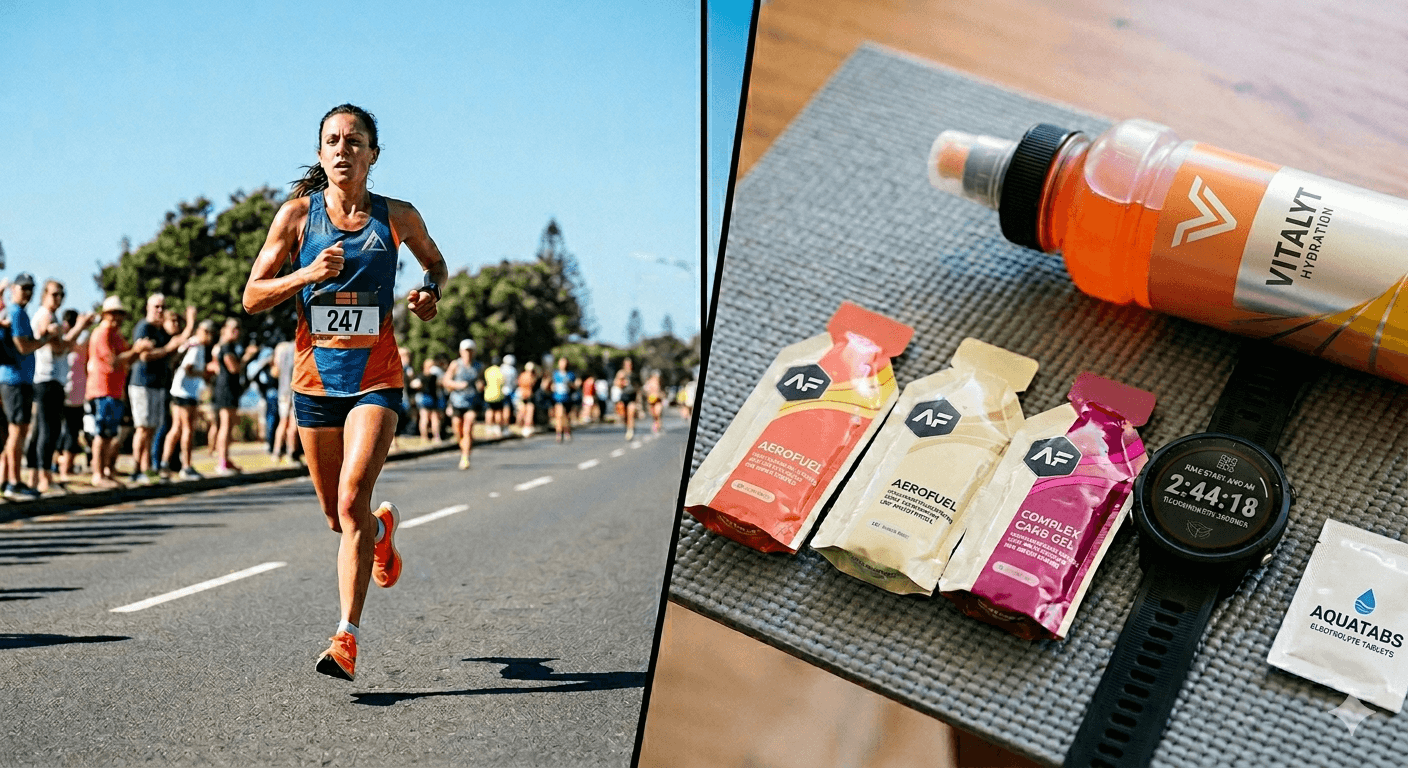
Months of training can get undone by bad fueling on race day. Bonking at mile 20, cramping on the bike, or panicking about finding a bathroom mid-race, these almost always trace back to a nutrition decision made hours or days earlier. Here's what to actually eat, when, and why.
Rule number one: nothing new on race day
Every food, gel, drink, or supplement you use on race day should already be tested in training. This is the most important rule in endurance nutrition, and somehow it gets broken constantly. Race expos are full of shiny new products. Aid stations hand out unfamiliar gels. Skip all of it unless you've already tried it.
Your gut is under real stress during hard effort. Food that's totally fine sitting on your couch can wreck you at race pace. Practice your actual race nutrition plan during long training sessions, ideally in similar heat and effort to what you'll face on the day.
The night before
Eat a normal dinner, something familiar. This isn't the moment for a giant pasta blowout if that's not already your thing. Moderate carbs, a bit of protein, low fat and fiber to keep your gut calm. Eat early enough that you're not still digesting at bedtime.
Good calls: rice with chicken or fish, pasta with a light sauce, a jacket potato. Skip: heavy sauces, high-fiber veggies, alcohol, and anything you haven't eaten before a long run.
Race morning: the pre-race meal
Eat 2-3 hours before your start. The goal is topping up your glycogen without overloading your stomach. Something around 200-400 calories, mostly carbs, works for most people.
- Porridge with banana and honey
- White toast with peanut butter and jam
- A bagel with a little cream cheese
- Rice cakes with banana, popular with long-course triathletes
Racing early and can't manage a full meal? A smaller snack 60-90 minutes out, a banana, some toast, an energy bar you already trust, beats nothing.
About caffeine: if you drink it normally, don't change that on race day. A coffee 45-60 minutes before the start can genuinely help with alertness and gives a small performance bump. If you don't usually drink coffee, today is not the day to start.
During the race
How much you need depends on distance and intensity. Rough framework:
- Under 60 minutes: just water, maybe nothing at all
- 60-90 minutes: about 30g carbs per hour, plus electrolytes
- 90 minutes to 2.5 hours: 45-60g carbs per hour
- Over 2.5 hours: 60-90g carbs per hour, and you'll need mixed sugar sources (glucose plus fructose) to absorb that much
Don't wait until you feel hungry or thirsty. Both signals show up too late. Eat and drink on a schedule, every 20-30 minutes for longer races, and start early before you're already depleted.
Electrolytes
Sweat takes sodium, potassium, and magnesium with it. On hot days, or in anything over 90 minutes, replacing electrolytes actually matters. Sports drinks, salt tabs, or gels all work. And don't overdo plain water either, drinking way too much of it can cause dangerously low sodium. Rare, but real.
After the race
Recovery eating starts within 30-45 minutes of finishing, while your muscles are most ready to absorb it. Aim for about 0.5g of carbs per kg of body weight, plus 20-25g of protein.
Easy options: chocolate milk (actually well-researched, not just a meme), a protein shake with a banana, a turkey sandwich. After that first window, get a proper meal in within two hours.
Rehydrate gradually instead of chugging everything at once. If you want to get precise, weigh yourself before and after and aim for about 1.5L of fluid per kg lost.
Log your race day nutrition while it's fresh
After every race, jot down what you ate, when, and how your stomach handled it. Patterns show up over a season. TripToRace's results log has a notes field for exactly this, so your nutrition strategy sits right alongside your finish time and conditions, ready for the next time you're racing somewhere new or the weather's different.
Good race nutrition isn't exotic. It's mostly repetition. Find what works, practice it, then do the same thing every single time.
Log your nutrition plan alongside your result
TripToRace's results notes field keeps your pre-race meal, your in-race gels, and how your stomach handled it right next to your finish time and conditions. What works in the heat is different from what works in the cold - and now you'll actually have that on record.
No credit card required